TRANSACTIONAL INTELLIGENCE®
IS A DISCIPLINE.
Transactional Intelligence (TQ) is a structured methodology for navigating the hidden layer beneath every conversation — the human exchanges that produce every outcome. TQ makes those exchanges visible, so you can navigate them consciously rather than be ruled by forces you cannot see.
Not a personality framework. Not a communication training. A discipline — with a traceable philosophical lineage, a formal eight-exchange architecture, and a body of practitioner work across more than twenty countries.
Every consequential exchange — every conversation, negotiation, agreement, and commitment — moves through a structured sequence of stages.
Most people cannot see the sequence. They experience its results: agreements that hold, or quietly collapse. Relationships that advance, or stall without apparent reason. Results that come, or don't.
TQ makes the sequence visible and navigable. That is the claim. It is learnable. It always has been.
"The question has never been whether you're transacting or not. The question is whether you're doing it consciously."
The Tradition
The philosophical foundation of TQ is Transactionalism — the pragmatist tradition formalized by John Dewey and Arthur F. Bentley in Knowing and the Known (1949). Their central claim: inquiry cannot separate the observer from what is observed. Knowledge is not a product of isolated individuals — it is a process of organism-in-environment.
TQ is the commercial application of that tradition. It takes the transactional worldview — that human beings are biological, linguistic, and transactional — and operationalizes it as a methodology for consequential professional exchange.
Kirkland Tibbels, who developed the philosophical foundations of Transactional Intelligence, is completing his doctoral dissertation, The Philosophy of Transactionalism and the Birth of Transactional Intelligence, in the Philosophy, Cosmology, and Consciousness doctoral program at the California Institute of Integral Studies. Expected completion: 2027.
Explore the tradition →The Scholarly Track
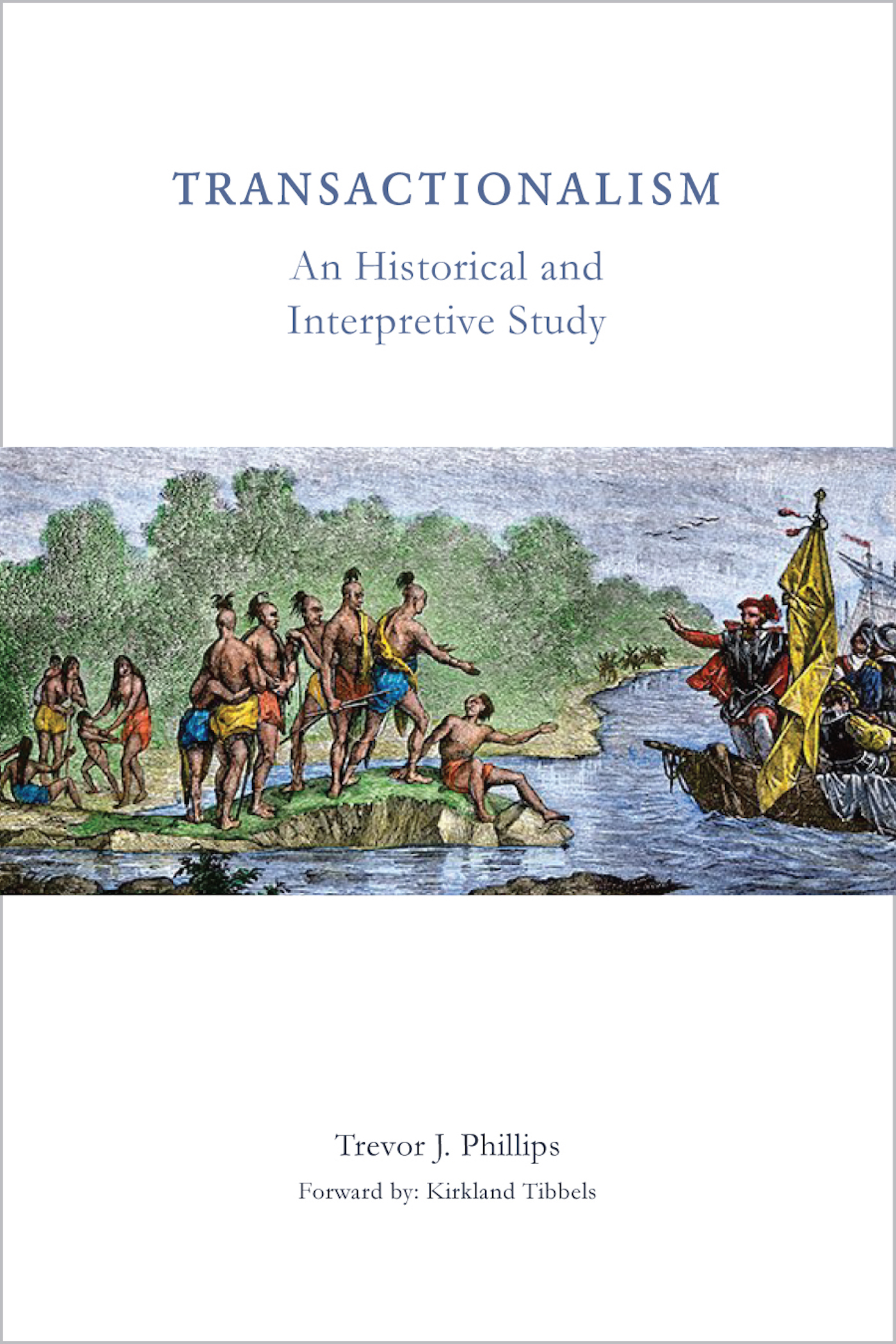
Transactional Intelligence is built on a published scholarly foundation. In 2013, Influence Ecology located, acquired the rights to, and published Trevor J. Phillips' 1966 doctoral dissertation, Transactionalism: An Historical and Interpretive Study — the most thorough scholarly treatment of the transactional tradition in print.
The foundational text →The Methodology
The Transaction Cycle™
Eight sequential exchanges. Every consequential transaction moves through them — whether or not the parties are aware.
Personality in Transaction™
Each type owns specific exchanges in the cycle. High TQ means deploying your natural move at the right moment. Low TQ is the same move deployed without awareness of where the transaction actually is.
The Infinity Loops™
The predictable breakdown pattern for each personality type. When a transaction stalls, there is a specific reason. TQ names it — and provides the intervention that restores forward motion.
TQ is not a personality assessment.
TQ is not Transactional Analysis.
TQ is not general communication training.
The Defining Work
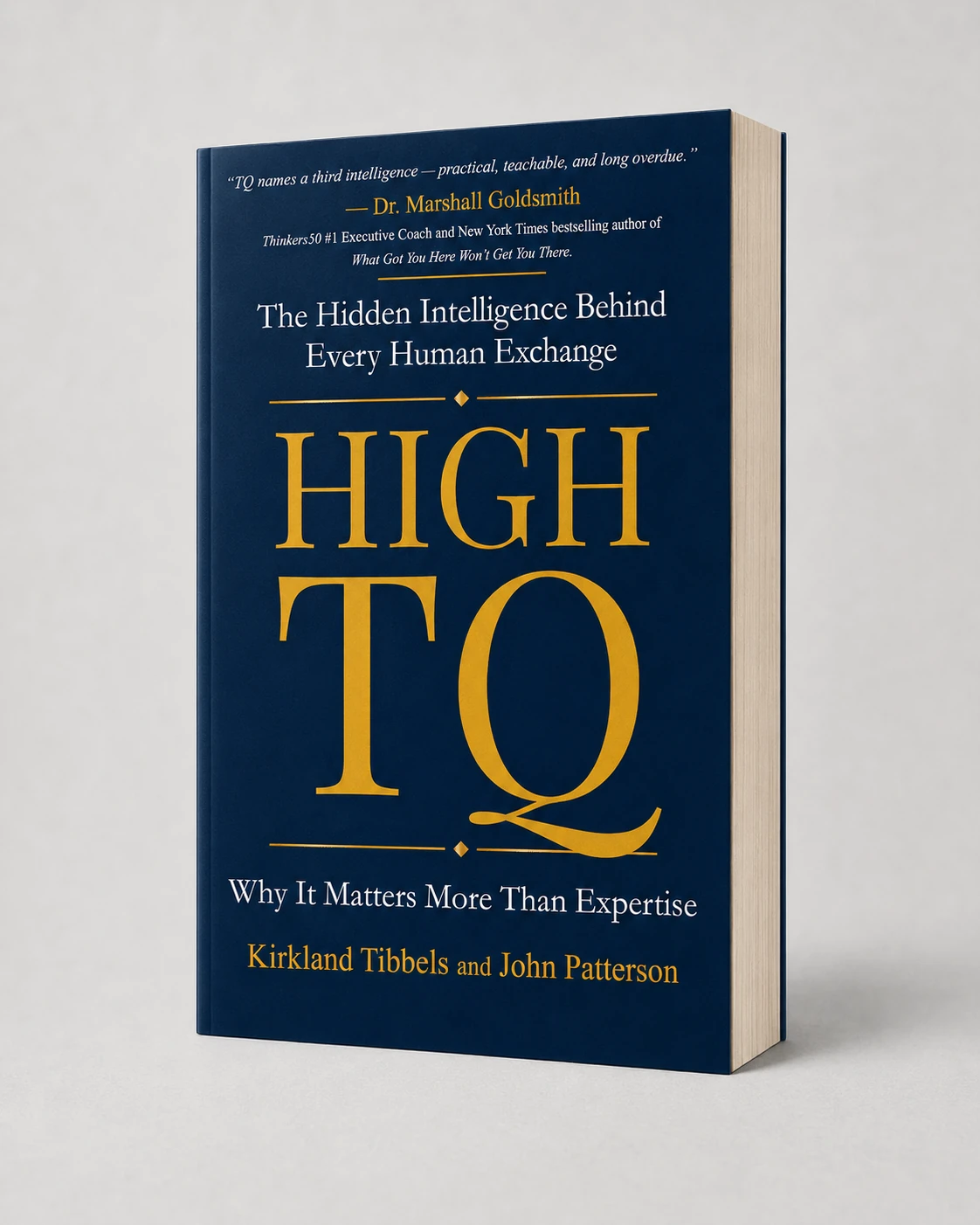
Transactional Intelligence®
HIGH TQ
Why It Matters More Than Expertise
The foundational text of the TQ discipline. Written by Kirkland Tibbels and John Patterson — who developed its philosophical foundations and built it into a teachable practice.
Book 1 of The TQ Series.
The TQ Ecosystem
The foundational essay on the transactional approach — written by Kirkland Tibbels.
Read the Primer →