The TQ Framework

TQ is not a collection of principles. It is a system — in which every component is necessary, and each answers questions the previous layer raises. The architecture runs from the biological conditions of human life through an eight-exchange operational model to a precise diagnostic for locating breakdown.

The Foundation: Three Levels

Every transaction operates simultaneously at three levels:

Biological

Drives and Conditions of Life — the stakes and aims that motivate transacting. What a person is actually trying to produce, and why it matters to them.

Linguistic

Narratives — the meanings that must be held by all parties at each stage of the exchange for the transaction to advance.

Transactional

Exchanges — the eight sequential stages of a complete transaction cycle.

All three levels are active in every transaction. A framework that addresses only one or two levels produces insight without traction.

Eight Exchanges

Every consequential transaction — regardless of scale, domain, or parties involved — moves through eight exchanges in sequence, clockwise. The sequence is not arbitrary. Each exchange creates the conditions for the next. Skipping exchanges, reversing direction, or forcing premature commitment produces predictable breakdown.
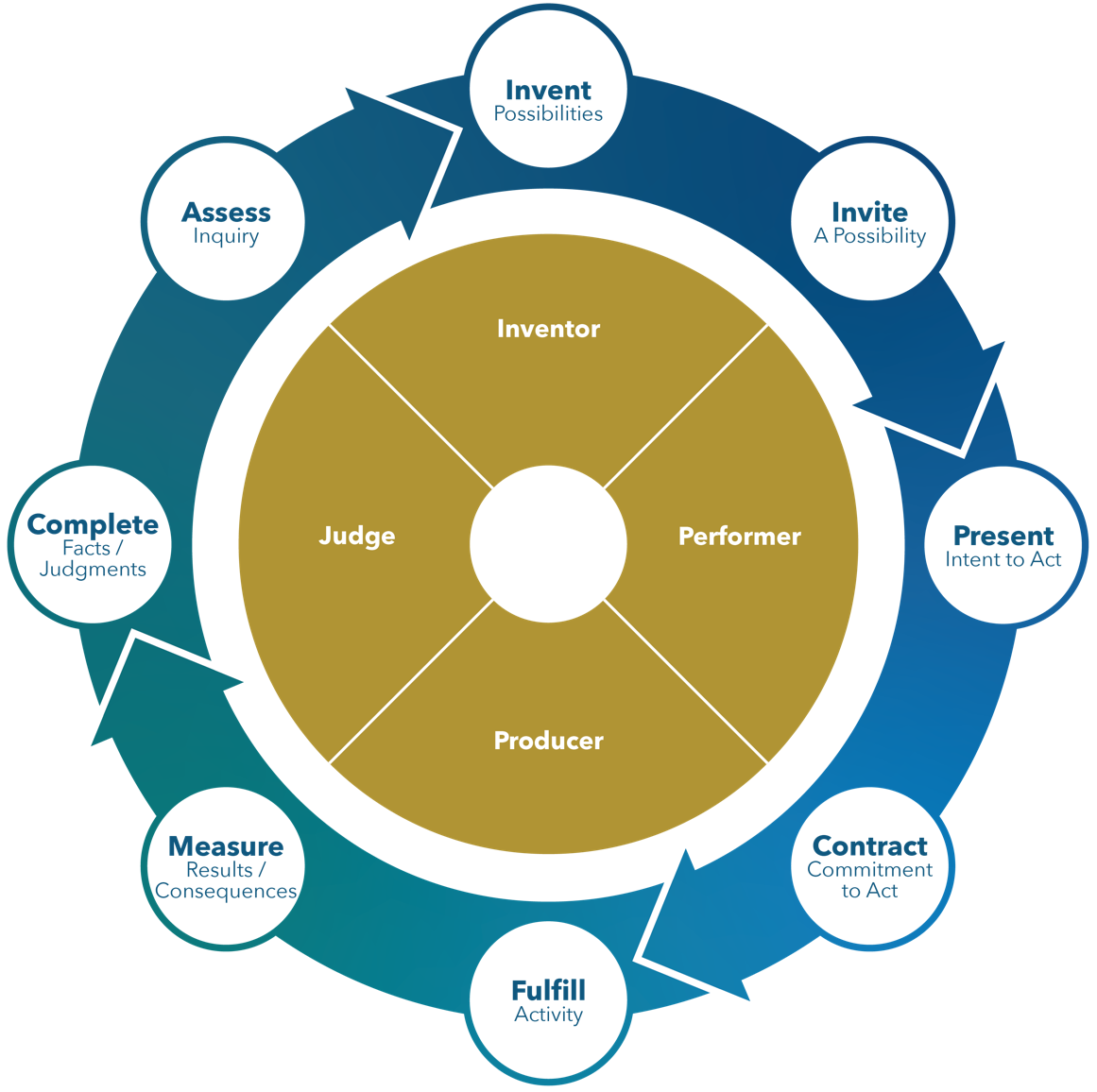
The Transaction Cycle showing eight sequential exchanges arranged clockwise, with the four personality positions anchored to the cycle.
The Transaction Cycle and the four personality positions.
  1. Invent — Generating the possibility. The Inventor's owned exchange.
  2. Invite — Extending the possibility to others. Shared by Inventor and Performer.
  3. Present — Making the case. The Performer's owned exchange.
  4. Contract — Reaching agreement on terms. Shared by Performer and Producer.
  5. Fulfill — Delivering on the agreement. The Producer's owned exchange.
  6. Measure — Assessing results against the agreement. Shared by Producer and Judge.
  7. Complete — Formal closure of the transaction. The Judge's owned exchange.
  8. Assess — Evaluating what was learned. Shared by Judge and Inventor.

The cycle is complete when all eight exchanges have occurred. An agreement that was never formally Completed is not complete — it is merely inactive. A transaction that was never Assessed has not been learned from. The precision of the framework is in its insistence on this: partial cycles produce partial results.
Personality Types in Transaction

TQ identifies four personality types, each grounded in a distinct philosophical orientation. Each type owns specific exchanges in the cycle — the positions where their natural capacity adds maximum value — and shares adjacent exchanges with neighboring types.

The philosophical layer is not decoration. It explains why each personality perceives the same exchange differently — the epistemic lens each type uses to evaluate what counts as valid input. This does explanatory work that behavioral labels alone cannot.

Inventor

Subjectivism

Trusts internal vision and subjective experience as the primary source of valid knowledge. Generates possibilities. Owns the Invent exchange. Shares Invite (with Performer) and Assess (with Judge).

Performer

Constructivism

Understands reality as socially constructed through language and relationship. Builds buy-in and narrative. Owns the Present exchange. Shares Invite (with Inventor) and Contract (with Producer).

Producer

Objectivism

Values observable, verifiable reality and measurable results. Executes and delivers. Owns the Fulfill exchange. Shares Contract (with Performer) and Measure (with Judge).

Judge

Skepticism

Requires evidence before acceptance. Closes, evaluates, and holds standards. Owns the Complete exchange. Shares Measure (with Producer) and Assess (with Inventor).

High TQ is not a personality type. It is the condition in which any personality navigates the full cycle with awareness — knowing when to deploy their natural move and when to step aside so others can make theirs.

Four Narratives

Each pair of exchanges in the cycle requires a specific narrative to be active for the transaction to advance. When the narrative required by the exchange does not match the narrative a party is operating from, the transaction stalls — even if both parties are acting in good faith.

A High TQ practitioner can identify which narrative is required at any stage, produce it authentically, and recognize when another party is not yet in that narrative — and respond accordingly rather than escalating, withdrawing, or forcing.

Breakdown as a Mechanism

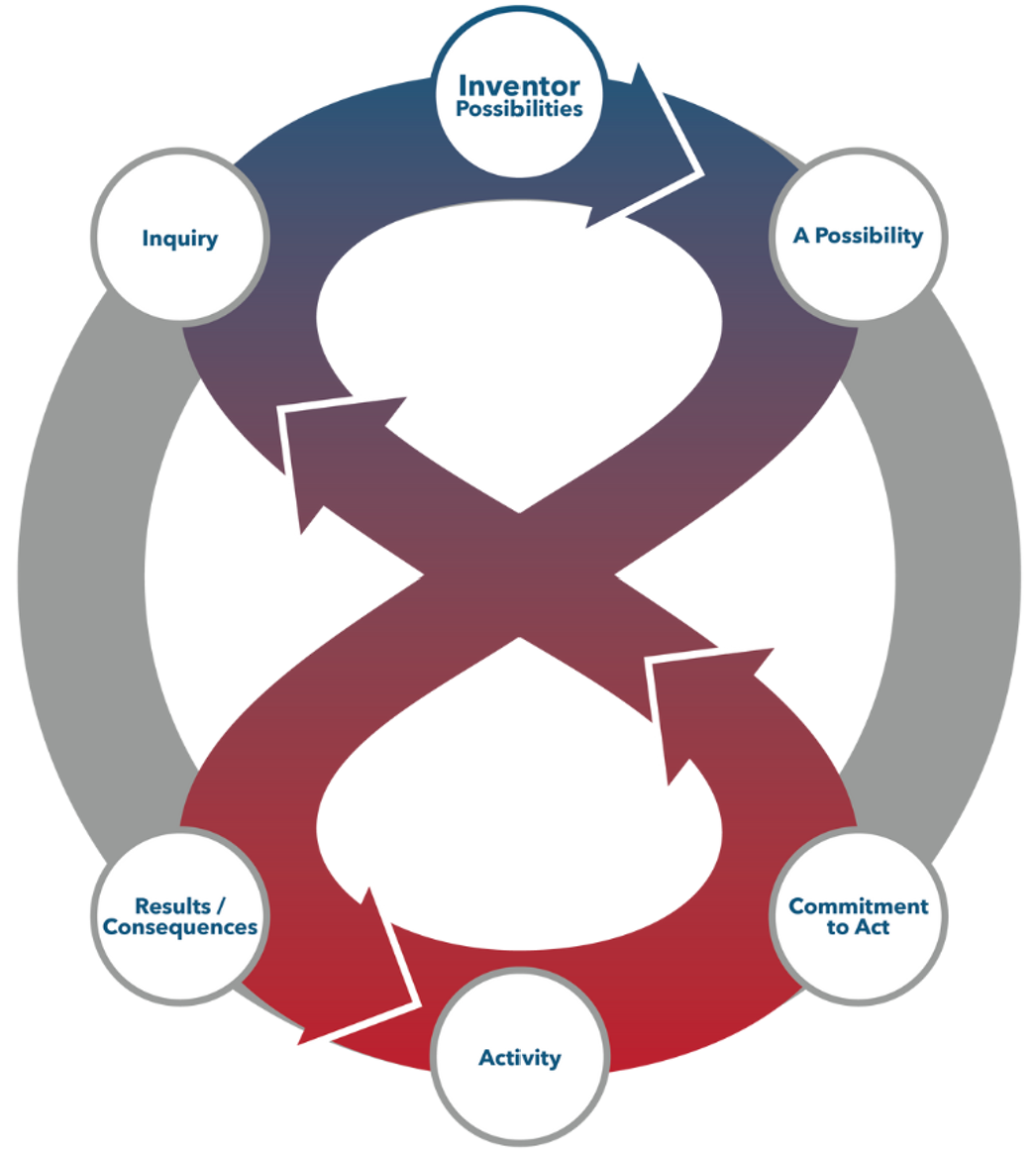
Each personality type has a characteristic breakdown pattern — a reversal in the transaction cycle that creates a self-reinforcing loop rather than forward progress. These are called Infinity Loops.

The loops are not personality flaws. They are the natural strengths of each type operating without transactional awareness — assets deployed at the wrong moment, in the wrong direction, or without the visibility and consent that would make them effective.

A sample Infinity Loop diagram for the Producer personality type, showing the characteristic reversal pattern in the transaction cycle.
Sample: The Producer's Infinity Loop.

The diagnostic value of the loops is their precision. When a transaction stalls, a practitioner can identify:

That level of diagnostic specificity — breakdown located, not merely named — is the operational contribution that distinguishes TQ from frameworks that identify dysfunction without specifying its position in the exchange.

The framework's distinction from adjacent traditions, the philosophical foundation document, and the book that operationalizes it.